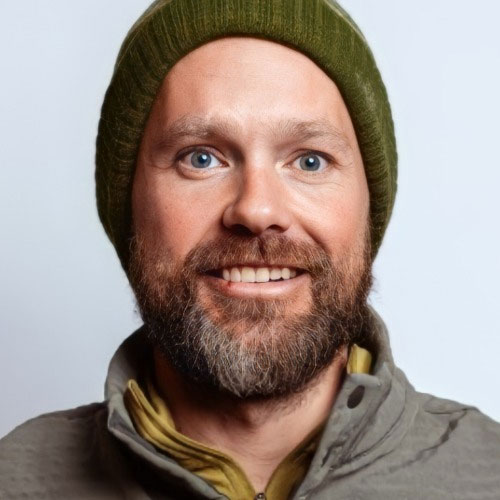
 Written by Justin Park| 01/27/2026
Private land hunting has always carried connotations of elite privilege, but social media has turned those tensions into a daily public fight online. Influencers, private leases, and accusations of “pay-to-play” hunting now collide in the dialogue, raising a bigger question: is private land hunting expanding access, or quietly locking it away for the 1%?
HLRBO is a platform that lets anyone lease hunting grounds from farmers, ranchers, and other private landowners. We see that model as a way to expand access for everyday hunters, which is why it caught our attention when Matt Rinella — brother of famous MeatEater founder Steven Rinella — began taking shots at us on social media.
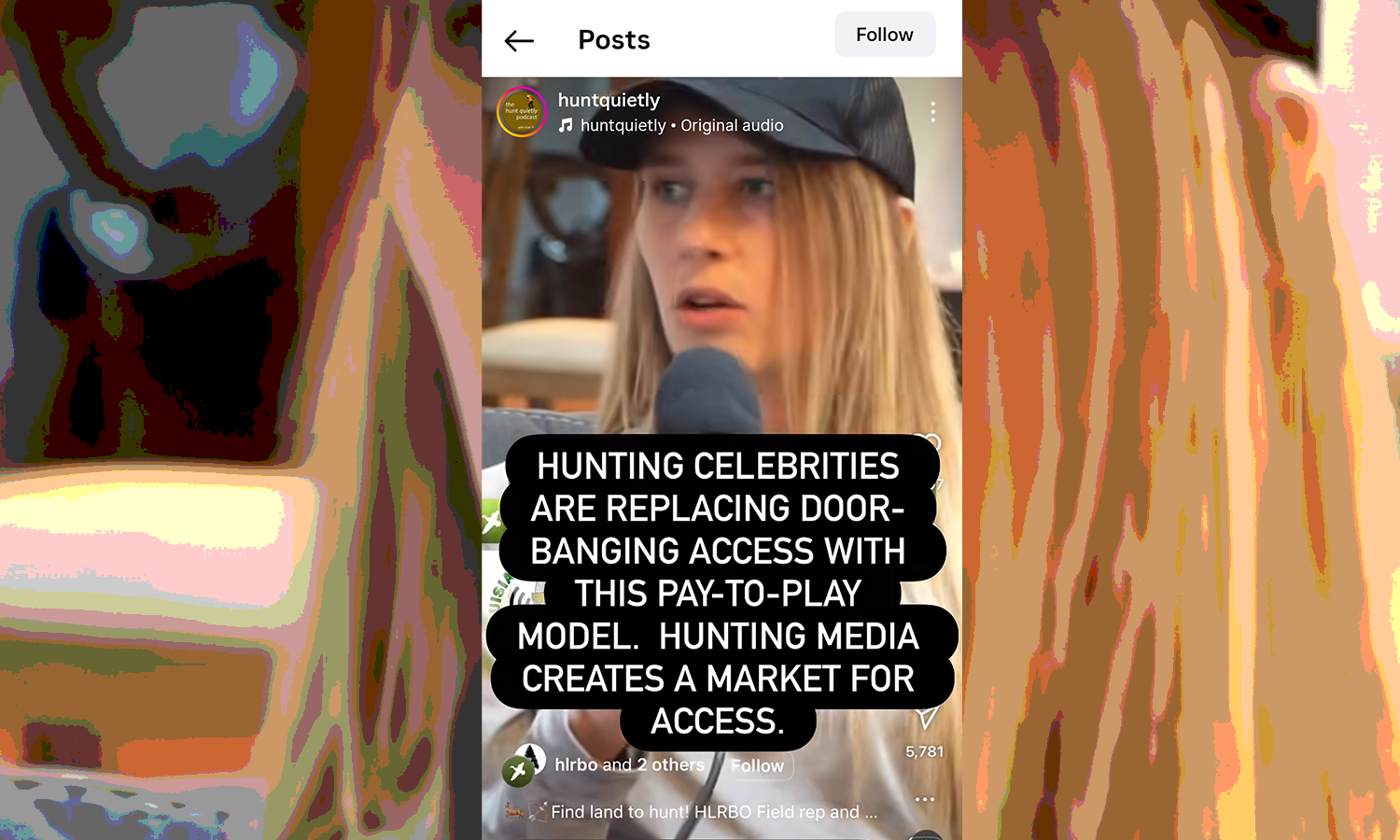
First, Matt Rinella reposted a podcast appearance by HLRBO Ambassador Katelyn Armstrong talking about land leasing, which he called "weak and cheesy." He also stated that “until hunting goes back to its roots and stops being ‘cool,’ we should expect less and less land to be available to those unwilling to stroke checks.”
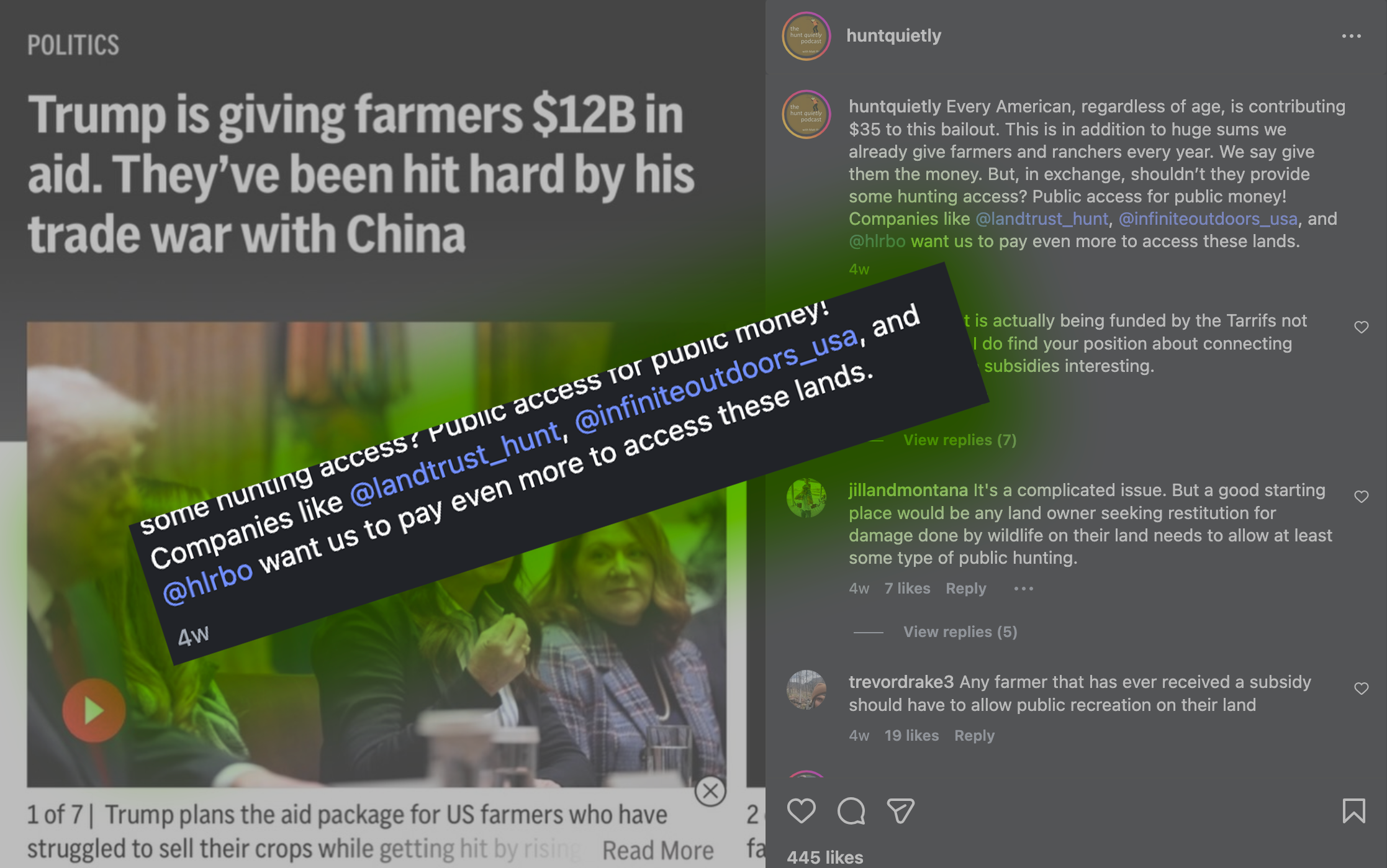
Then, a few days later, HLRBO caught a stray from another post. Rinella's Hunt Quietly handle posted that in addition to tax subsidies for farmers and ranchers, HLRBO and similar platforms “want [hunters] to pay even more to access these lands.”
Matt is a contrarian who isn’t shy about criticizing hunting media (including his brother), hunting influencers, and taking thought-provoking stances such as “we don’t need more hunters.”
While Steven has built a large media business around hunting, Matt promotes a “hunt quietly” philosophy that pushes back on commercialization, social media–driven exposure, and market forces that he believes restrict access, including private land leasing.
Matt appeared on a 2021 MeatEater podcast (now deleted), argued with Steven, and by all accounts they're now estranged. Very online folks might say he’s a “professional hater.”
Which can be fun — until you end up in the crosshairs. We take issue with his assumption that HLRBO is here to hike up lease prices, and we would like to formally submit that hunting private lands is not "weak and cheesy."
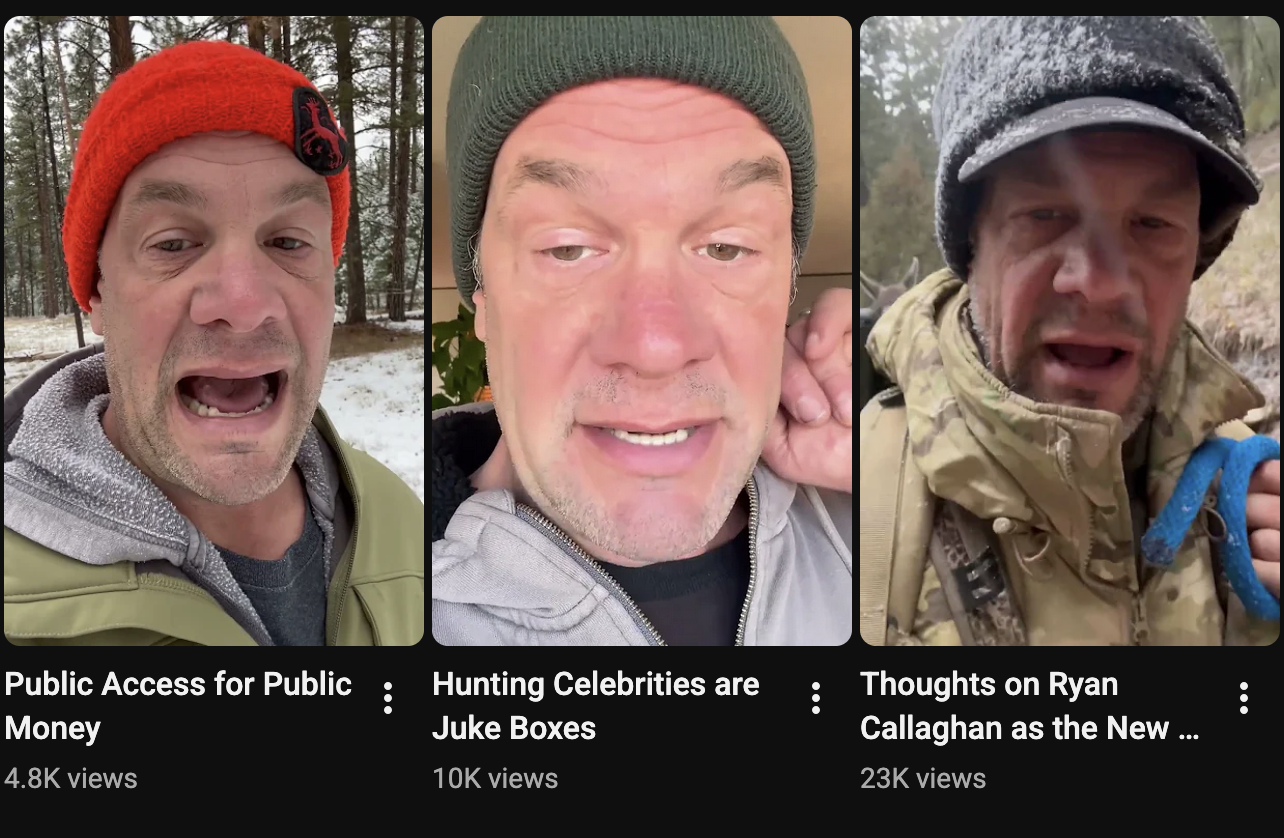
Beyond name-calling, Rinella has also been prescriptive in his campaign against private leasing. He asked Hunt Quietly followers to boycott “outfitters that lease private land” and issued this commandment: “Do not lease hunting land in states that have programs to compensate landowners for providing public access.”
What Rinella Gets Right
It’s hard to argue with Rinella’s disdain for some of social media’s perverse incentives and we generally appreciate his reverence for hunting tradition, so let’s steelman his criticism before we offer our perspective.
In the Hunt Quietly Instagram post pictured above, Rinella rhetorically asks, if farmers are accepting their share of the $12 billion ag bailout, “in exchange, shouldn’t they provide some hunting access? Public access for public money!”
That’s not a fringe policy suggestion. Federal grants to states often come with coercive strings attached and most Americans support tying welfare benefits to work requirements, so it’s not ridiculous to extend that logic to farm aid. You could argue for fewer farm subsidies, but as long as farmers are getting them, they shouldn’t be surprised to see incentives and requirements as strings attached.
Hunt Quietly supports “walk-in access” programs and so does HLRBO. These government programs pay landowners for state-managed hunting access to private lands for the general public and are a low-effort option for larger landowners, though the pay per acre will generally be lower than private leasing. You can read our take on pros and cons of walk-in access for landowners here.
What Matt Rinella Gets Wrong About Private Leasing
We believe that private land hunting does not decrease access. While Hunt Quietly/Rinella blames hunting influencers for driving the quest for ever-bigger trophies and demonizes private hunting leases in the process, chasing big bucks is hardly a new phenomenon. But a recent post claims that "hunters wouldn’t hoard 1000s of acres to shoot big bucks if they couldn’t brag about it online."
HLRBO supports a mixed access model that includes public land, walk-in programs, private clubs, and short-term private leases, because no single system works everywhere or for everyone. Our goal is to expand total hunting access by giving landowners and hunters more options, not to replace public access or drive up costs.
By Rinella's logic, Joe Everyman could get equal access to the big buck acreage via walk-in access programs if the landowners weren’t tempted by the big paydays from the influencers.
Blanket arguments against leasing may resonate in some regions where public land is scarce, but a boycott of private land hunting is an absolutist take that ignores on-the-ground realities and takes access tools out of the toolbox. Is Rinella simply mad there’s a market for prime hunting land? There will always be someone willing to pay for privacy and exclusivity — and yes, big bucks — not just influencers and billionaires. We actually think that’s a good thing all around.
Hunting leases have been around much longer than influencers and they provide options for both hunters and landowners. Yes, some landowners can demand large checks for top-tier properties, but there are many kinds of hunting access: day leases, hunting club properties, public lands, walk-in access, and the plethora of lease arrangements on private land parcels from an acre to 50,000. We see pros and cons to each while Rinella seems to see only the pros of public access and the cons of private leasing.
Ownership Enables Conservation
Rinella advocates boycotting private land outfitters and refusing to lease land if a state has public walk-in access. He also requests that if you absolutely must lease private land, that you “liberally share your leased land with fellow hunters.”
Sharing a lease is a great way to defray costs, but we don't see why he wants to take the private lease option off the table completely. Suppose a hunter lives in a state with walk-in access land but the nearest option is 100 miles away and offers marginal hunting compared to an affordable private lease option 5 minutes from his house? If he hunts quietly on that private parcel to maximize his hunting hours instead of crowding into the walk-in parcel, isn't that better for both him and the others that will be hunting the walk-in land?
Likewise, does Rinella think that someone like Bill Winke who dedicated most of his life to building a whitetail paradise should just open it up to the public? How long does he think it would remain a desirable hunting location? Private control of land and the prospect of being financially rewarded for improving habitat and limiting hunting pressure over years just doesn't happen on public land where hikers, hunters, and any manner of users pressure game willfully or unwittingly. Making public land habitat improvements can take literal Acts of Congress or require layers of bureaucratic approvals that can take decades to approve that must balance many non-hunting stakeholder interests.
Private Land Hunting Decreases Crowding
Because the compensation per acre for allowing walk-in access is generally low, it’s not attractive to many landowners, especially those with highly desirable habitat or small parcels which often aren’t even eligible for walk-in access programs. The higher rates that land lessors can earn on the open market ultimately make more hunting land available and spread hunters out, decreasing crowding on public lands, which is another of Rinella’s hobby horses.
Most of the listings on HLRBO are from first-time lessors and the average parcel size is between 80 and 100 acres. This means lots of new, small properties for regular people to hunt that weren't available before they came to the platform.
Forcing or coercing all private landowners into offering public hunting access hamstrings the abilities of farmers and other landowners to maximize profit on their property. When larger rural properties become liabilities, they often sell to recoup losses, which can turn these huntable lands into developments. And no one gets to hunt a new subdivision.
Maintaining huntable land is not free, and landowners absorb real costs tied to habitat work, liability insurance, gates, roads, and enforcement. Private leasing helps cover those expenses and, in many cases, keeps land in agriculture and/or habitat instead of being sold, subdivided, or closed entirely.
Sure, if all the farms in the country were magically open to walk-in access, that would spread hunters out even more than private leasing alone, but does Rinella wish that all huntable private lands were somehow made public to ensure equal access for all? He hasn’t taken his argument against private leases to its logical conclusion, but it’s hard to see where it would stop.
More Private Leases Means Lower Lease Costs
You don’t have to be an economist to understand that more leasable lands means lower lease prices. Yes, there will be influencers and fat cats willing to pay an unthinkable premium in some areas, but the advent of platforms such as HLRBO has democratized hunting leasing.
Atop his repost of Armstrong's podcast appearance talking about HLRBO, Rinella wrote, "Hunting Celebrities are Replacing Door-Banging Access With This Pay-to-Play Model. Hunting Media Creates a Market for Access." This framing ignores the fact that paying for lease rights happened long before HLRBO or even the Internet.
HLRBO didn't create a market for something that was previously free to all and start charging people for it, but that doesn't stop Rinella from bemoaning the "commodification" of hunting access. Even the walk-in access that Hunt Quietly advocates pays landowners to allow the public to hunt their land. Rinella apparently just prefers payments be laundered through the government for purity before they go into the hands of property owners.
Even public land access is paid for, though the costs are much less obvious. Staff, maintenance, bureaucracy, and foregone property taxes are costs placed on the taxpayer en masse. You'd have to time travel to pre-Colonial America to find a time that hunting grounds (perhaps) weren't bartered, bought, or sold.
HLRBO founder Heath Schubert started the platform to create more access. He couldn’t find anywhere to duck hunt and saw an opportunity to make it easier for landowners to open their properties to hunters willing to pay for hunting privileges.
Yes, HLRBO is a for-profit business, but we do not “want [people] to pay even more to access [farm and ranch] lands,” as Hunt Quietly claims. Increasing the supply of leasable private land as HLRBO has grown has brought millions more acres into play for hunters nationwide. Most properties on the site were not previously leased to hunters, meaning a net gain for hunting access.
Rinella is right that hunting influencers and media personalities have a financial incentive to shoot big bucks, which can bid up costs on premium properties. But what Hunt Quietly forgets while focusing on this caricatured hunting influencer enemy is that sites such as HLRBO provide a counterbalance to this trend, lowering the barrier for average hunters to find a lease by reducing costs, increasing options, and removing the “who you know” factor. Most HLRBO hunting leases are small properties with small price tags that allow average hunters to “hunt quietly” on the land.
Justin Park is a Colorado-based writer, editor, and avid hunter with a passion for the outdoors. He contributes to leading publications such as GearJunkie, Popular Mechanics, Powder, and Men's Journal, and serves as Editor of Wild Snow. Park is deeply involved in conservation and recreation advocacy, serving as Chapter Chair of the Rocky Mountain Elk Foundation (RMEF) in Summit County. He also represents RMEF on a state recreation committee focused on proactively addressing land use conflicts.