 Written by Justin Park|
"There just aren't as many birds as there used to be" sounds like the excuse of a bad turkey hunter. But if someone said that in the past 10-15 years, there's a good chance they were right.
Turkey declines in the Southeast in the early 2010s grabbed headlines, and by 2020 similar declines were observed in Midwestern states. According to Michael J. Chamberlain, Ph.D., a National Wild Turkey Federation Distinguished Professor at the University of Georgia, declines aren't nationwide but share a common contributing factor where they exist.
"One issue that is consistent in areas seeing declines is the loss of available habitat, and the degradation in quality of remaining habitat," says Chamberlain.
How Hunters Can Help
Anyone can join the National Wild Turkey Federation, donate, and volunteer with a local chapter to help sustain the animal Benjamin Franklin was said to have once favored as the United States' national bird.
The NWTF is the primary vehicle for supporting turkey-centric conservation and for funding wild turkey research. Over the past three years, the NWTF has contributed $2.3 million to research in multiple states, especially in the South where declines have been most pronounced.
Dr. Chamberlain also needs help from hunters to provide genetic samples of interesting turkey specimens for his Wild Turkey DNA project. The project is assembling a nationwide database of turkey genetic information, which will help researchers better understand turkey populations.
How Landowners Can Help
Landowners have an even greater opportunity to help turkey numbers, primarily by cultivating favorable habitat. Chamberlain points to "loss of hardwood forests, fragmentation of forests, changes to farming practices that have impacted early successional plant communities, and changes to forest management practices" as impacting the birds.
Whether you have 1 or 1,000 acres, Chamberlain encourages you to take a stab at improving even a small piece of turkey-friendly land. The NWTF has resources on its website to assist landowners in improving habitat, but Chamberlain offers a simple exercise to understand what good turkey habitat looks like:
1. Pick an area and lay down on your stomach. "If you can see if front of you, so can a young poult," says Chamberlain.
2. Now, roll onto your back. "If you look around you and see something to hide under, so can a young poult," explains Chamberlain of how to spot good turkey cover.
3. Lastly, get up on one knee. "That’s the view that an adult has, so if you can see through and over the vegetation, so can a turkey."
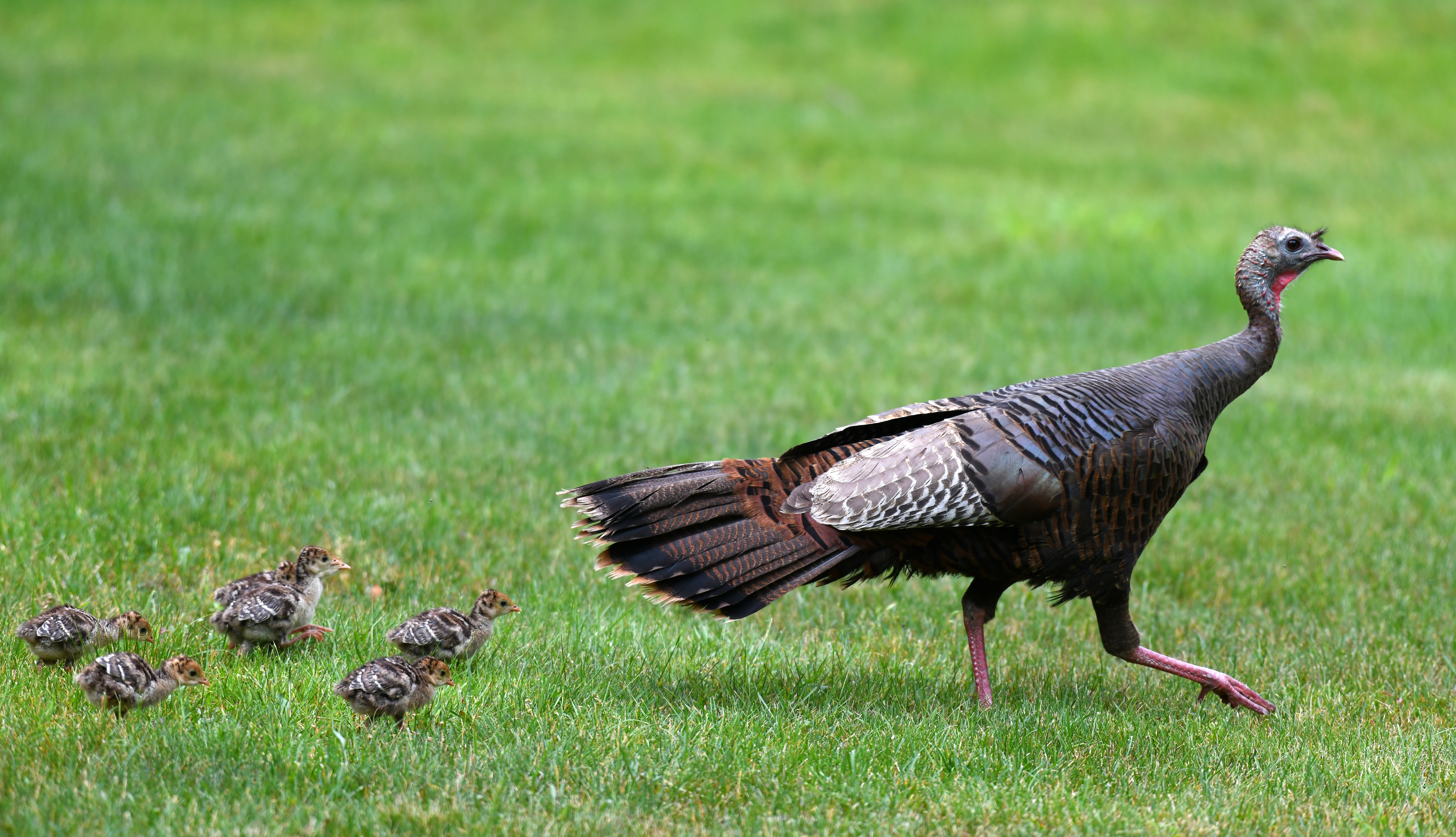
Low-growing vegetation provides cover for turkeys of all ages while still permitting adults to use their excellent vision to spot predators. This vegetation which includes berries and other low-growing bushes and annual crops provides feed throughout the year as well.
 Hunting Considerations When Turkeys are Scarce
Unless you own thousands of acres, Chamberlain recommends talking with your neighbors if you believe your turkey numbers are down. It's harder to positively impact turkey habitat and population health if even one neighbor is harvesting high numbers of turkey from a dwindling group.
Landowners can use game cameras to get a sense of turkey numbers and aim to harvest no more than 20% of toms while attempting to improve habitat and numbers. Landowners who lease their property should discuss their concerns with lessees to get buy-in for whatever measures they identify to give turkeys a chance to rebound.
Chamberlain says winter is the best time to take stock by surveying neighbors and observing your own land. This time of year, birds group up, making them easier to count.
"You can then assume that when the flocks of toms split up as spring approaches, the number that was in that winter flock is the total number in the surrounding area, as toms typically leave their winter ranges and move some distance to their spring ranges," he explains.
To get further help with surveying turkey numbers and improving habitat for turkey, consider reaching out to your local cooperative extension office, NWTF chapter, and USDA offices for consultations.
Justin Park is a Colorado-based writer, editor, and avid hunter with a passion for the outdoors. He contributes to leading publications such as GearJunkie, Popular Mechanics, Powder, and Men's Journal, and serves as Editor of Wild Snow. Park is deeply involved in conservation and recreation advocacy, serving as Chapter Chair of the Rocky Mountain Elk Foundation (RMEF) in Summit County. He also represents RMEF on a state recreation committee focused on proactively addressing land use conflicts.